


Why I Choose JPEG for Runway Photography
- Longview Studios
- May 22, 2025
- 2 min read

Updated: Jul 17, 2025
As a fashion and runway photographer, I often get raised eyebrows when I tell people: "Yes, I shoot JPEG—only for runways."
And no, it's not because I don’t understand the value of RAW files (I do—and I shoot RAW for editorials, portraits, and controlled environments). But when it comes to the high-speed, high-stakes world of runway photography, JPEG gives me the edge. Here’s why.
1. Speed is Everything
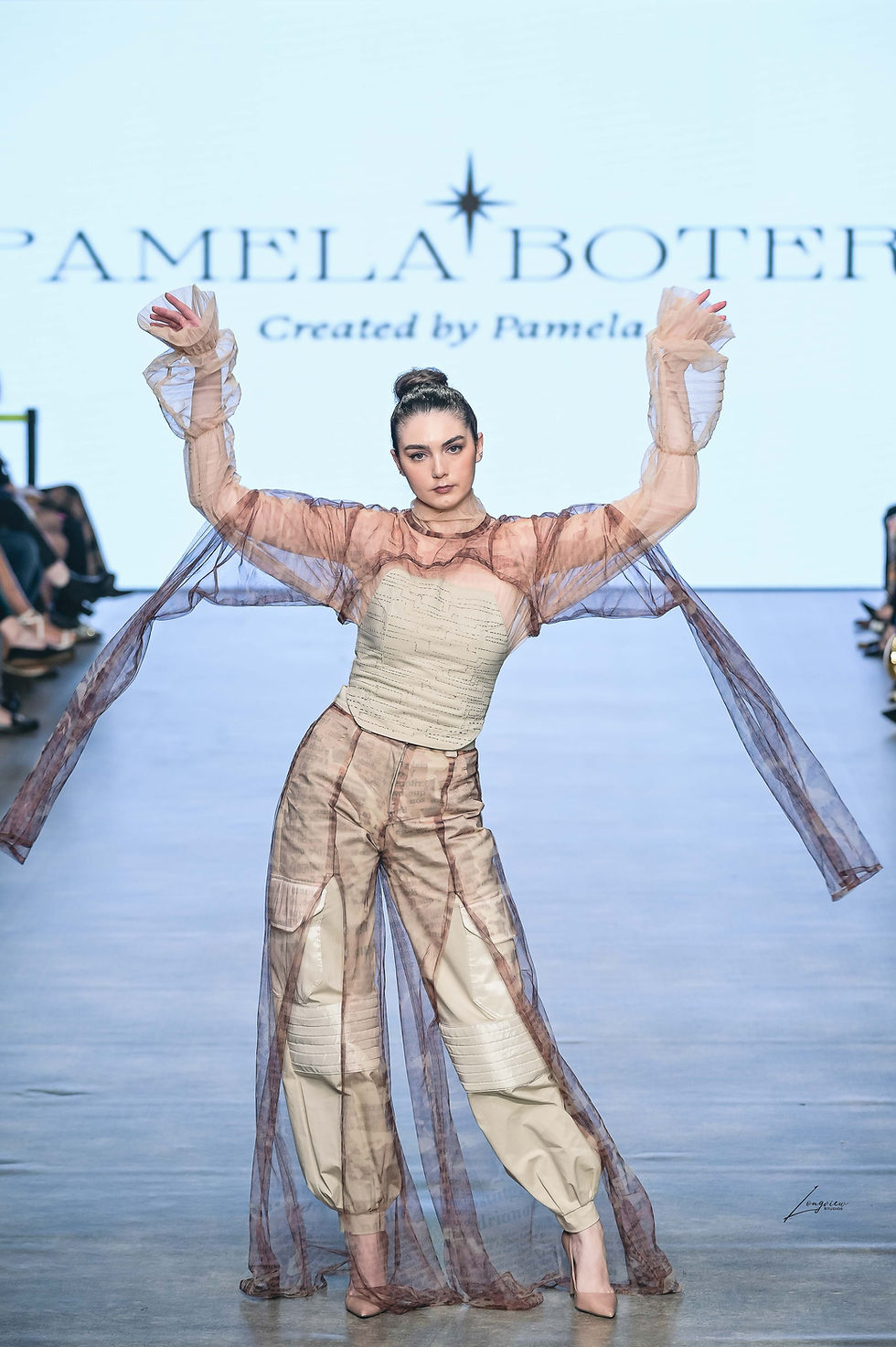
When you're shooting a model walking straight toward your lens at 5+ frames per second, every millisecond counts. Shooting in JPEG means:
Faster write speeds to the memory card
Quicker buffer clearing
More consistent burst performance
I can fire long bursts without worrying about my camera choking or freezing up halfway through a critical look.
2. JPEG Handles High ISO Surprisingly Well
This might sound controversial, but in many modern cameras, JPEG files actually look cleaner than RAW at high ISO—especially in terms of color noise.
Runways are often dimly lit, backlit, or full of contrast. In these conditions, shooting JPEG often gives me:
Less visible noise
Better skin tones straight out of camera
More consistent color under mixed lighting
And while RAW technically gives you more flexibility, with JPEG I can spend less time in post and more time shooting.
3. No Buffer, No Problem
One of the biggest issues with RAW in runway situations is buffering. You press the shutter, get a few frames, and then suddenly... nothing.
That brief delay could mean missing:
The perfect mid-stride shot
A dynamic turn at the end of the runway
A look exchanged between model and audience
With JPEG, I’m able to shoot long continuous bursts and never worry about missing those micro-moments.
4. Yes, You Have to Nail Your Exposure
Here’s the catch: JPEG isn’t forgiving.
There’s no latitude for lazy metering. No massive highlight recovery. No pulling shadows 3 stops up. You have to:

Know your lighting
Trust your histogram
Shoot with intent
But honestly, that challenge forces precision. And with proper pre-show tests and camera calibration, I hit the exposure almost every time.
5. The Results Speak for Themselves
When I deliver a runway gallery shot in JPEG:
The images are sharp and vibrant
The colors are true-to-life
The files are light, fast to transfer, and easy for editors to use immediately
And perhaps most importantly—I never miss a beat.
Final Thoughts: JPEG for Speed, RAW for Flexibility
I still shoot RAW for editorial, campaign, and commercial work—any situation where lighting is controlled, or creative grading is key.
But for runway? JPEG wins. Every. Single. Time.
So if you’ve been hesitant to switch from RAW on the runway, give JPEG a shot. You might just find yourself shooting faster, smarter, and with more confidence than ever.
📸 Curious about my camera setup for runway? Want to see JPEG vs. RAW comparisons? Drop a comment below or connect with me on Instagram @longview_studios.


Comments